

Gentle Planning: a softer way to set goals for the new year
1/2/2026
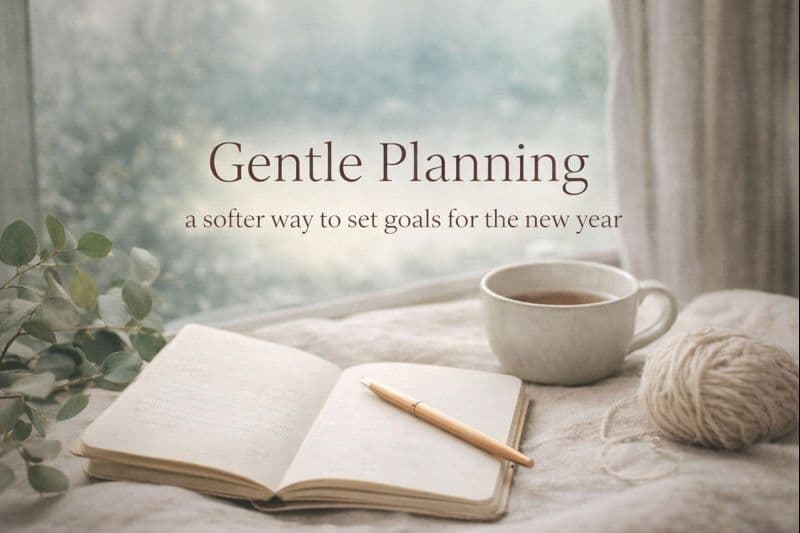
The beginning of a new year is often accompanied by noise and a surge of motivation to achieve everything in the world and become the best version of yourself. Lists, decisions, pressure to decide who you should become in the coming year.
But growth doesn't always require a push. Sometimes it requires freedom and space.
Why gentle planning matters
Traditional goal-setting often starts with
“What should I achieve?”
Gentle planning starts with a different question:
“Where am I right now?”
Without that pause, goals easily turn into borrowed ambitions, unfinished lists, and disappointment by spring. Gentle planning allows you to move forward without leaving yourself behind.
It invites reflection and awareness, rather than judgment and pressure.

Start with reflection, not goals
Before looking ahead, it’s worth turning back.
Ask yourself:
- What supported me this year?
- What drained me more than I expected?
- What do I already have, and what do I want to keep in my life?
- What do I no longer want to carry into the next year?
- Where did I grow, even if no one noticed?
- What are my true values and beliefs?
- How do I see myself in the future, and what is that future me doing to make it happen?
- What talents of mine am I not using? Why?
Reflection is not about analysing every mistake. It’s about noticing patterns –emotional, physical, creative – and letting them inform what comes next.
This part works best in solitude. Just you, a notebook, and time that doesn’t need to perform.
The importance of solitude and honesty
Gentle planning requires privacy. Not because your goals are secret – but because they’re still forming.
When we think in front of others, we often edit ourselves. When we’re alone, we tend to be more honest.
Create a small ritual:
- silence or soft background sound
- a warm drink
- pen and paper instead of a screen
It’s your listening time.
Tools that support gentle planning
🌿 The Wheel of Balance
The Wheel of Balance helps you see your life as a whole.
Common categories:
- Health & body
- Work / creativity
- Relationships
- Rest & joy
- Personal growth
- Home & environment
Rate each area from 1 to 10 to notice what really happens there.
Instead of asking “How do I make this perfect?”, try:
- What feels slightly neglected?
- What already feels stable?
- Where do I want less effort, not more?
📝 Gentle goal-setting
After reflection, goals become сlearer. A gentle goal:
- supports your energy instead of consuming it
- feels aligned with your current season
- leaves room for rest and change
Try framing goals as intentions:
- “I want to create more space for…”
- “I want to relate to ___ with more care…”
- “This year, I want to set priority in…”
🧭 One word for the year
I love this practice and have been doing it for four years. Instead of making a long list, choose one word – an anchor.
A daily reminder of priority you can return to when you've lost your way or direction.
Examples:
kindness, bravery, balance, chill, steadiness, dream, grounding, spaciousness, attentiveness, family, health, generosity, love, inspiration...

Planning as self-care, not self-control
Gentle planning recognises that you are not a project to optimise. You’re a person who changes, tires, learns, and adapts. Plans are not promises. They are conversations with yourself.
You’re allowed to revise them. You’re allowed to rest before achieving them. You’re allowed to choose differently halfway through the year.
Conclusion
The new year doesn’t need you to reinvent yourself. It only asks you to arrive – honestly.
Let your planning be slow. Let your goals feel kind. Let your direction come from within, not from comparison.
Sometimes the most meaningful progress begins when you stop rushing toward it.